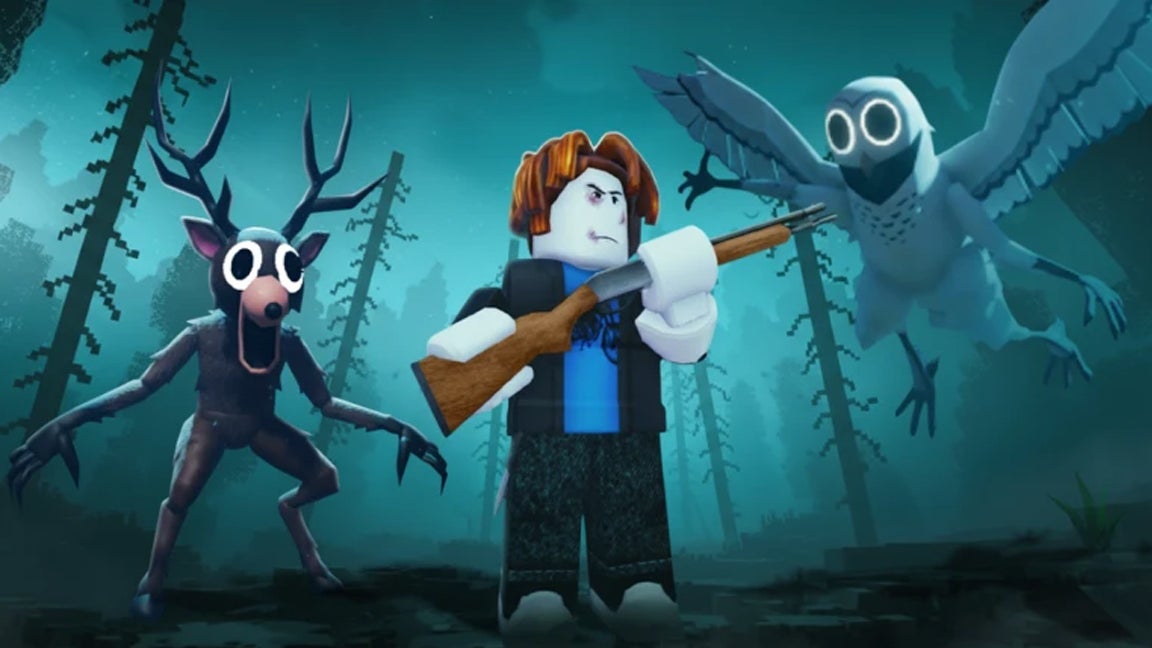
99 Nights in the Forest is a co-op survival game on Roblox with one rule underneath everything: daytime is your whole life, and the night is what it costs. By day you chop, craft and build. By night the forest comes for your campfire. Most new players lose because they treat the night as a thing they survive by fighting. You survive the night by what you finished building before dusk.
The core loop
Every day follows the same five beats, and the game gets harder on each repeat:
- Gather. Chop trees, pick up food, scavenge materials near camp. The map gives you wood, scraps and edible things for free during daylight.
- Craft and upgrade. The crafting bench converts your haul into better tools, traps and storage. Its upgrade level decides what you are even allowed to build.
- Prepare. Upgrade the campfire, raise walls, lay traps, check the food pile. This step is where winning nights are actually decided.
- Defend. Survive the night inside the light radius. Anything outside the fire glow is the Deer’s hunting ground.
- Repeat. Each night scales a little harder, and by night 57 or so the spawns have stopped being a tutorial.
Your real objectives
The game’s menu says “survive 99 nights,” and that is the long game, not the opening plan. In your first hours the objectives are:
- Keep the campfire alive. It is your light, your safe zone and your progression gate all at once. A weak fire behind beautiful walls is still a weak fire.
- Rescue the missing children. There are four missing children scattered across the map. You find them through the bulletin board quest, follow the red-arrow markers, fight the guardians, and carry each child back to camp. It sounds like a side quest until you realize rescuing them plus expanding the bonfire lets you skip roughly 8 days of progression per night — that is the single biggest speedup in the game, and a documented community route now chains it early.
- Build toward 99 nights. Only after the rescue engine is running do you start thinking about the long-haul base, Forest Rage hard mode, and the Research Outpost.
The survival rules that keep new squads alive
| Rule | Why it matters |
|---|---|
| Never fight outside the light radius at night | The Deer hunts darkness; the light is your arena |
| Keep a food buffer of several meals per player | Hunger bites hardest mid-siege, not at dinner time |
| Upgrade the crafting bench before hoarding wood | Better tools multiply every future gathering run |
| Stay in pairs after night 5 | Pack attacks punish solo wanderers |
| Keep a repair stack of wood | The Ram charges straight through your walls |
A note on dying: when you die, the materials you were carrying drop with you. That one fact changes how you should play day one — travel light, bring things home before dark, and do not haul half the map on your first scout.
What to do on your very first day
You are under-prepared, and that is fine. Do exactly this:
- Chop wood non-stop until you can build the crafting bench and a basic axe. Then craft a spear. The spear reaches enemies from inside your walls, which matters more than damage in week one.
- Do not explore far. Walk the near landmarks, mark them on your mental map, and come back. Exploration comes at night 9–10 once the base holds on its own.
- At night, stand in the light and do nothing heroic. If something pushes the walls, poke it with the spear from inside the glow. If nothing comes, enjoy the breather.
- On night 2, start the campfire upgrade push. Level 2 buys you the bigger light radius and the fishing rod route, and the fishing route unlocks the
yay fishingchat code that pays out 2 free Diamonds. Nobody’s first campfire plan includes fishing, and that is exactly the unlock everyone misses.
What a “good” first night looks like
You will know the loop is clicking when: dusk falls and the base is already organized, the fire is lit, nobody panics at a small bump on the wall, and the morning starts with a repair check instead of a rebuild. Most first runs spend the whole night scrambling; the goal of learning the loop is to get to the point where the night is boring. Boring nights are how 99 nights happen.
How squad roles split
A good four-player squad splits into jobs from the first afternoon: one chopper (the future Lumberjack), one gatherer who scavenges food and scraps, one crafter who never leaves the bench, and one scout who maps nearby landmarks by daylight. Roles do not need to be classes yet — even as a free Camper you can own a job. The Classes section is where you pick which job you actually want to be.
Ready for the day-by-day plan? Walk into a run with the First 10 Nights Route open. And when the campfire question starts nagging, Campfire Upgrades answers what to level first.